

Understanding ROC Farming, Biodynamic Wine, Sulfites & Sustainable Wine in Paso Robles
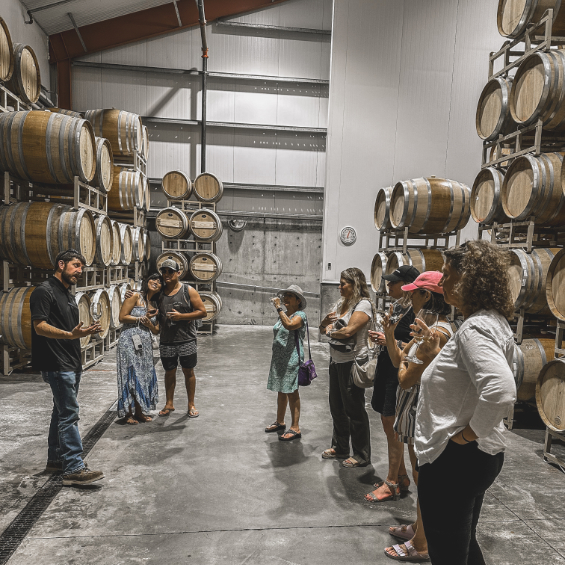
Earlier this year, six ROC-certified wineries came together for the first-ever Paso Wine ROCs media tour, bringing writers and industry voices to Paso Robles around Earth Day to experience firsthand how regenerative farming is shaping the next generation of wine. Toast Tours was honored to be part of this first-of-its-kind experience, and excited to learn more from the wineries and people leading Paso Robles’ regenerative wine movement.
What makes Paso Robles special isn’t just the wine. It’s the willingness of this region to experiment, collaborate, and farm differently. Here, regenerative agriculture isn’t a marketing buzzword. It’s happening in the vineyards, in the soils, in the grazing animals between the vines, and in the long-term thinking of wineries working to leave the land better than they found it.
For travelers who love natural wine, organic farming, biodynamic principles, or simply discovering wineries that feel thoughtful and deeply connected to the land, Paso Robles offers something increasingly rare: a wine region that still feels pioneering. Paso Robles now has the highest concentration of ROC wineries in the world.
Table of Contents
What Is Regenerative Organic Wine?
Regenerative Organic Wine is wine made from grapes grown on vineyards farmed to improve the health of people, animals, and the land. Instead of simply sustaining the ecosystem, regenerative farming aims to leave it healthier than before.
ROC is not just a random wine industry buzzword or local Paso Robles program. The certification was created by the Regenerative Organic Alliance, founded by Patagonia, Dr. Bronner’s, and the Rodale Institute, organizations that have become leaders in sustainability and regenerative agriculture.
Their goal was to create a farming standard that goes beyond “organic” by focusing on soil health, biodiversity, animal welfare, and social fairness alongside environmental sustainability.
The truth is that farming has an enormous impact on the planet.
Agriculture can deplete soils, increase erosion, reduce biodiversity, pollute waterways, and contribute to carbon emissions. But it can also do the opposite.
Healthy farming systems can rebuild soils, improve biodiversity, support pollinators, capture carbon from the atmosphere, improve water retention, create healthier ecosystems, and improve conditions for farm workers.
That’s why regenerative farming has become one of the most important conversations in modern agriculture, and increasingly, in wine.
At Toast Tours, we spend our days visiting wineries throughout Paso Robles, walking vineyards, tasting wines, and talking with the people farming the land. One term we’re hearing more and more is ROC, short for Regenerative Organic Certified.
For many wine lovers, regenerative organic farming represents the next evolution beyond both organic and biodynamic agriculture.
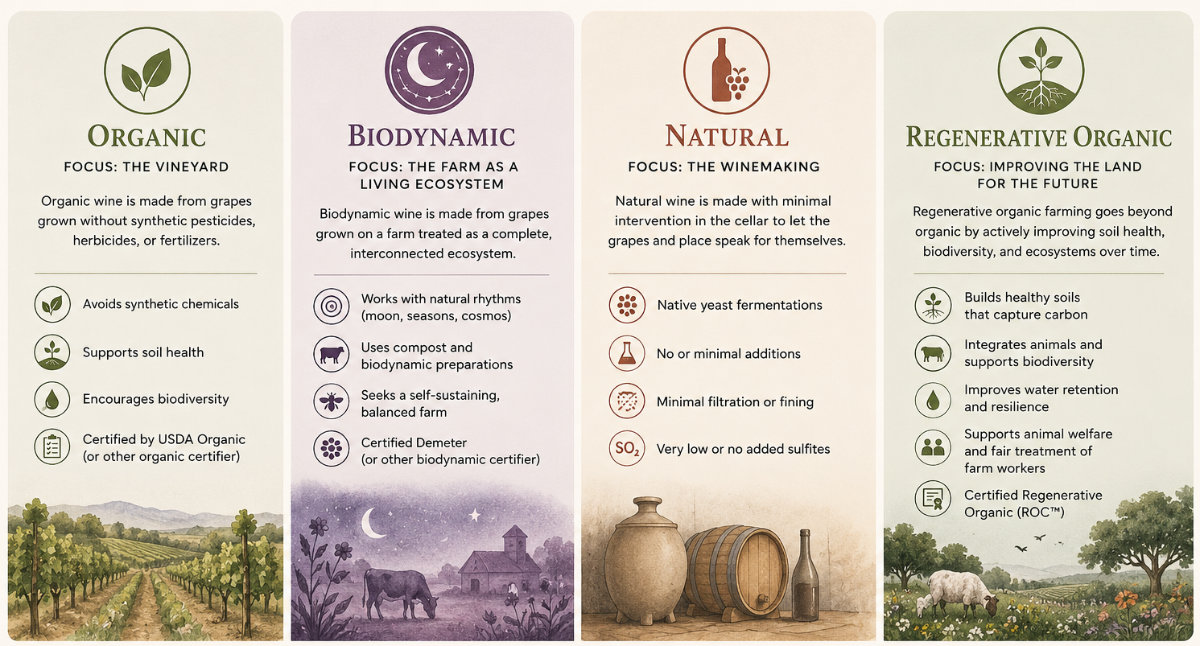
What Is Organic Wine?
Organic wine is wine made from grapes grown without synthetic pesticides, herbicides, or fertilizers, though approved natural and organic sprays may still be used in the vineyard.
In the United States, the phrase “organic wine” can mean two different things:
- Wine Made From Organic Grapes: The grapes are farmed organically, but small amounts of sulfites may still be added during winemaking.
- Certified Organic Wine: Both the grapes and winemaking process follow strict organic standards, including major restrictions on added sulfites.
The Benefits of Organic Farming
Organic farming has helped move winegrowing toward healthier soils, reduced chemical use, improved biodiversity, cleaner waterways, and more environmentally conscious farming.
For many wineries, organic certification also creates accountability and transparency around farming practices.
The Limitations of Organic Wine
Organic certification is important, but it has limitations.
Traditional organic standards focus mostly on what farmers avoid, such as synthetic pesticides, herbicides, fertilizers, and GMOs.
But organic certification does not necessarily measure soil regeneration, carbon capture, biodiversity improvements, ecosystem restoration, or worker welfare.
There are also practical challenges in winemaking.
In the United States, wines labeled “certified organic wine” cannot contain added sulfites. Many wineries believe small sulfur additions are important for wine stability, freshness, and aging potential.
As a result, many excellent wineries farm organically but do not always market themselves primarily as organic wine brands.
Does Organic Wine Have Sulfites?
Yes, organic wines still contain sulfites. Sulfites occur naturally in grapes and are produced naturally during fermentation. This is one of the biggest misconceptions in wine. Even natural wines contain sulfites.
The real difference is usually how much is added. Many winemakers add small amounts to help stabilize wine and preserve freshness during aging and transport. Adding sulfites helps prevent wine from turning funky, oxidized, or unstable over time.
For most people, sulfites are not the primary cause of wine headaches. Factors like alcohol level, dehydration, sugar, histamines, and overall wine quality & wine additives are often much more significant.
Is Sulfite-Free Wine Real?
Not exactly. All wine naturally contains some sulfites because sulfites occur naturally in grapes, and yeast creates small amounts of sulfites (sulfur dioxide) as a byproduct when turning grape sugar into alcohol. So virtually all wine contains at least some naturally occurring sulfites, even if none are added.
Even wines labeled “no added sulfites” still contain naturally occurring sulfites.
The term “sulfite-free wine” is often used informally to describe wines with no added sulfites or very low sulfite levels.
Organic wine is about much more than sulfites. Today, the conversation around healthier and more sustainable wine includes soil health, biodiversity, environmental impact, long-term sustainability, and the well-being of the people and animals connected to farming.
Regenerative organic farming takes this even further by aiming not just to sustain the land, but to actively improve it.
What Is Biodynamic Wine?
Biodynamic Wine is wine made from grapes grown on a farm treated as a living, interconnected ecosystem. The goal is to create a balanced, self-sustaining vineyard that relies as little as possible on outside inputs.
Biodynamic vineyards often focus on composting, biodiversity, cover crops, integrating animals into the vineyard, reducing outside inputs, and creating more self-sustaining farming systems.
Many wineries appreciate Biodynamics because it strongly emphasizes soil health, biodiversity, ecosystem balance, and long-term vineyard vitality.
The Benefits of Biodynamic Farming
Biodynamic farming has influenced many modern regenerative practices.
Its strengths include holistic ecosystem thinking, strong biodiversity practices, healthier soils, reduced chemical dependence, and integrated farming systems.
Many biodynamic vineyards also produce some of the world’s most respected wines.
The Limitations of Biodynamic Farming
At the same time, Biodynamics can be controversial.
Some biodynamic principles involve lunar cycles and philosophical concepts that some farmers and consumers consider difficult to measure scientifically.
There can also be practical challenges in warm climates like Paso Robles, where certain biodynamic winemaking restrictions may not always align with ideal winemaking conditions.
Even wineries that appreciate Biodynamic farming sometimes prefer more measurable and science-based regenerative standards.
What Is Natural Wine?
Natural wine is less a strict certification and more a philosophy.
Generally, natural winemakers aim to intervene as little as possible during both farming and winemaking. That can include native yeast fermentation, minimal additives, little filtration, and low or no added sulfites.
Natural wine can be exciting, expressive, and highly individual.
But because there is no universal definition or certification, the term can mean very different things from one producer to another.
Some natural wines are extraordinary. Others can be unstable or inconsistent.
Organic vs Biodynamic vs Natural vs ROC
Organic wine starts in the vineyard: the grapes are farmed without synthetic pesticides or other synthetic chemicals.
Biodynamic farming focuses on creating a balanced farm ecosystem where the vineyard, animals, soil, and plants all support each other.
Natural wine focuses on minimal intervention using organically farmed grapes and adding as little as possible during winemaking.
ROC (Regenerative Organic Certified): instead of just sustaining the land, you aim to improve it with a focus on fair treatment of people, animal welfare, and healthy soil.

What Is Regenerative Farming?
Regenerative organic farming is an approach to agriculture focused on improving the long-term improve the health of people, animals, and the land.
Regenerative organic farming includes practices such as:
- Building healthier soils that capture and store carbon
- Avoiding synthetic chemicals and minimizing outside inputs
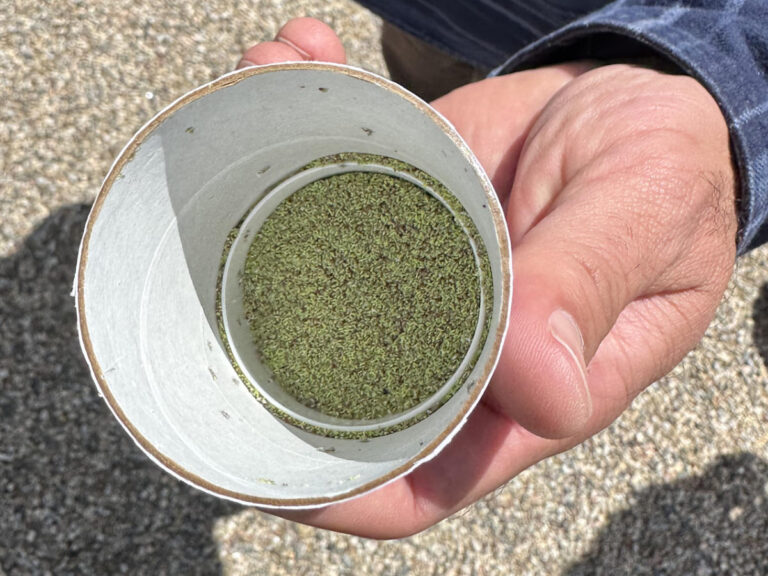
- Using cover crops to prevent erosion and improve soil fertility
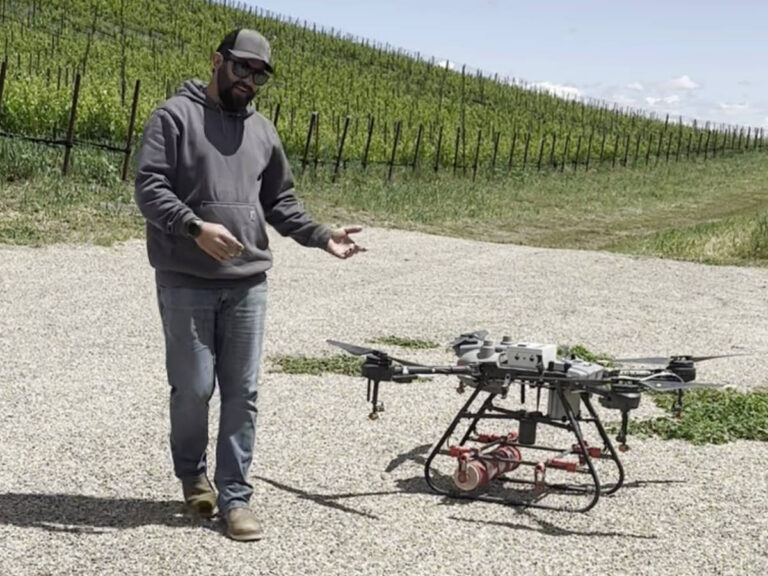
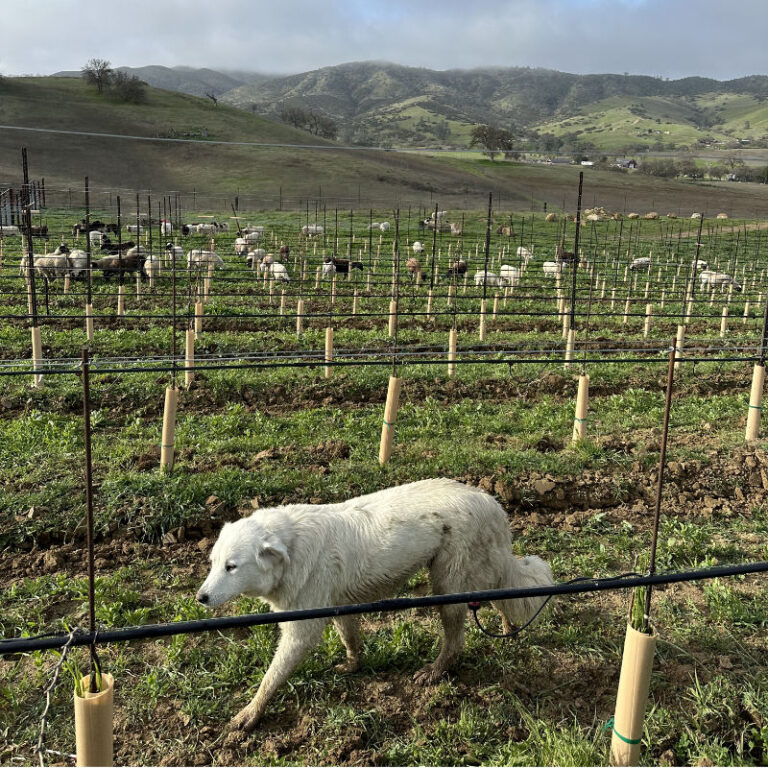
- Grazing sheep in vineyards for natural weed control and fertilization
- Increasing biodiversity with animals, insects, and native plants
- Conserving water and energy
- Supporting animal welfare and fair treatment of farmworkers
Regenerative farming goes beyond simply avoiding chemicals.
Rather than asking, How do we do less harm? Regenerative farming asks: How do we actively improve the land over time?
That can include practices like cover cropping, composting, integrating animals into farming systems, reducing tillage, improving soil biology, increasing biodiversity, supporting pollinators, improving water retention, and capturing carbon in the soil.
Healthy soils can store carbon, which is one reason regenerative agriculture has become an increasingly important part of the climate conversation.
In vineyards, healthier soils can also create more resilient vines, improved water efficiency, stronger ecosystems, more balanced fruit, and wines that better express place and vintage.
What Is Regenerative Organic Certified®?
Regenerative Organic Certified, often shortened to ROC, is one of the most comprehensive certifications in agriculture.
ROC combines organic farming standards, regenerative soil health practices, animal welfare standards, and social fairness standards for workers.
That last point is important.
ROC is not just about the environment. It also focuses on creating healthier and more equitable systems for the people working the land.
In many ways, ROC combines the rigor of organic certification, the ecosystem focus of Biodynamics, measurable regenerative practices, climate-conscious farming, and worker protections.
Many people see ROC as the next evolution of sustainable agriculture.
Looking for Regenerative Organic Certified® crops or ingredients? Check out the directory of certified producers!
The Different Levels of ROC Certification
Bronze ROC
Bronze is the entry level of ROC certification.
To qualify, farms must already be certified organic and begin implementing regenerative practices focused on soil health, biodiversity, ecosystem improvement, and cover cropping.
Bronze establishes the foundation for regenerative farming systems.
Silver ROC
Silver certification requires broader implementation of regenerative practices throughout the farm.
At this level, farms must demonstrate stronger performance in areas like soil regeneration, biodiversity, worker fairness, ecosystem management, and animal welfare.
Silver represents a more advanced regenerative farming system integrated across the operation.
Gold ROC
Gold is the highest level of Regenerative Organic Certified farming.
Gold-certified farms are expected to demonstrate leadership in soil regeneration, biodiversity, carbon sequestration, ecosystem restoration, social fairness, and animal welfare.
The goal is not simply sustainable farming, but actively improving the health of the land over time.
Paso Robles Has Become a Leader in ROC Wine
Paso Robles has quietly become one of the most important wine regions in the country for regenerative organic viticulture.
Tablas Creek Vineyard became the first vineyard in the world to achieve Regenerative Organic Certified status and helped pioneer many of the farming conversations now influencing wineries across California.
Today, six Paso Robles wineries are part of the region’s ROC movement:
- Booker Vineyard/My Favorite Neighbor (Silver ROC)
- Halter Ranch (Silver ROC)
- Le Cuvier (Bronze ROC)
- Villa Creek Cellars/MAHA Estate (Silver ROC)
- O’Neill Vintners & Distillers/Robert Hall Winery (Bronze ROC)
- Tablas Creek Vineyard (Gold ROC)
Together, these wineries are helping position Paso Robles as a global leader in regenerative organic winegrowing.
Why Regenerative Farming Works Especially Well in Paso Robles
Paso Robles has always had an independent and experimental spirit.
Long before regenerative farming became a major industry conversation, Paso Robles had already built a reputation for experimentation, independence, and innovation.
The region helped introduce many Americans to Rhône grape varieties through pioneering wineries like Tablas Creek, whose partnership with France’s Château de Beaucastel played a major role in shaping Paso’s Rhône movement and identity.
That same spirit of experimentation continues today in farming.
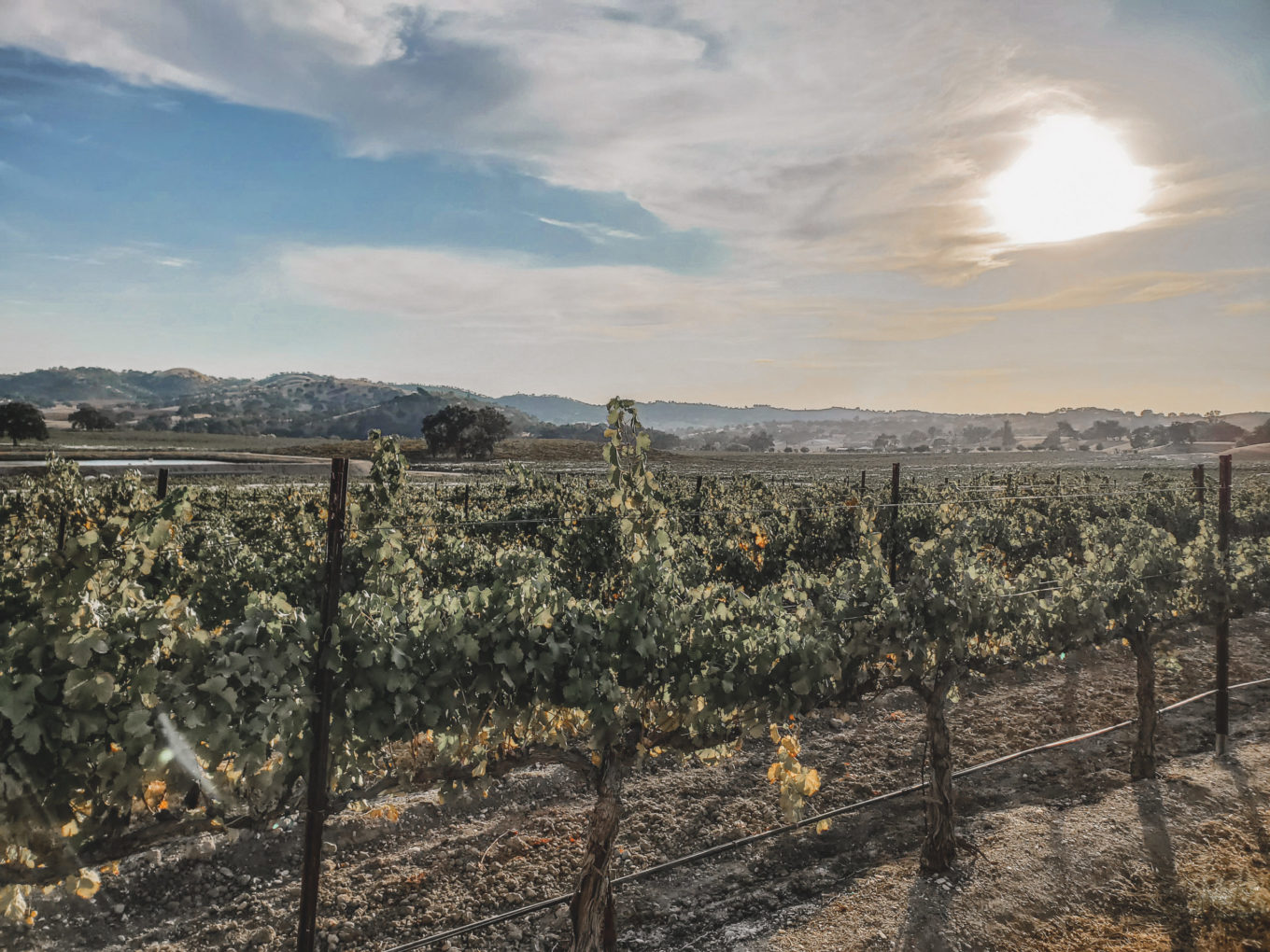
With its warm days, cool nights, diverse soils, and wide range of microclimates, Paso Robles has long attracted growers willing to challenge conventional vineyard practices and explore new approaches to sustainability, soil health, biodiversity, and dry farming.
Unlike many traditional European wine regions where rainfall still occurs during parts of the growing season, Paso Robles experiences long, hot, and remarkably dry summers with very little in-season rain. Yet vineyards can still survive, and even thrive, with little or no irrigation.
A major reason is Paso’s limestone-rich soils, which act like a natural sponge, absorbing winter rainfall deep underground and slowly releasing moisture back to the vines throughout the growing season.
That combination of climate, geology, and farming innovation has helped make Paso Robles one of the most exciting regions in the world for regenerative and dry-farmed viticulture.
Paso’s Mediterranean climate and naturally dry growing season also make the region particularly well-suited for regenerative farming practices like cover cropping, composting, reducing tillage, integrating animals into vineyards, increasing biodiversity, and building healthier soils with improved water retention.
Perhaps most importantly, Paso Robles has a collaborative wine culture where innovation is openly shared and experimentation is celebrated. Many of the region’s growers regularly exchange ideas, farming practices, and observations with one another, helping accelerate the adoption of regenerative techniques across the region.
Why Farming Matters for Wine Lovers
Regenerative organic farming matters because wine is an agricultural product.
Before wine is fermented, aged, bottled, and poured, it begins as fruit grown in soil.
The health of that soil affects the health of the vines. The health of the vines affects the quality of the fruit. And the quality of the fruit shapes the wine in your glass.
Anyone who has tasted a sun-ripened tomato from a backyard garden next to a mass-produced grocery store tomato already understands this idea intuitively: healthier farming often creates more vibrant, expressive, and flavorful food.
For many wine lovers, regenerative farming offers a deeper way to understand wine, not just as a beverage, but as a reflection of land, climate, farming, people, and place.
And increasingly, many growers believe that healthier vineyards produce healthier fruit, more distinctive wines, and stronger ecosystems that can thrive for generations to come.
Experience Regenerative Organic Wine in Paso Robles
One of the best ways to understand regenerative farming is to experience it firsthand.
Walking through vineyards, seeing sheep grazing between rows, observing cover crops and pollinator habitats, and tasting wines connected to healthy soils creates a completely different understanding than simply reading labels in a store.
Paso Robles is becoming one of the few wine regions where visitors can explore multiple ROC-certified wineries within a relatively small area.
At Toast Tours, we love helping guests discover the people, farming philosophies, and wines shaping the future of Paso Robles wine country.
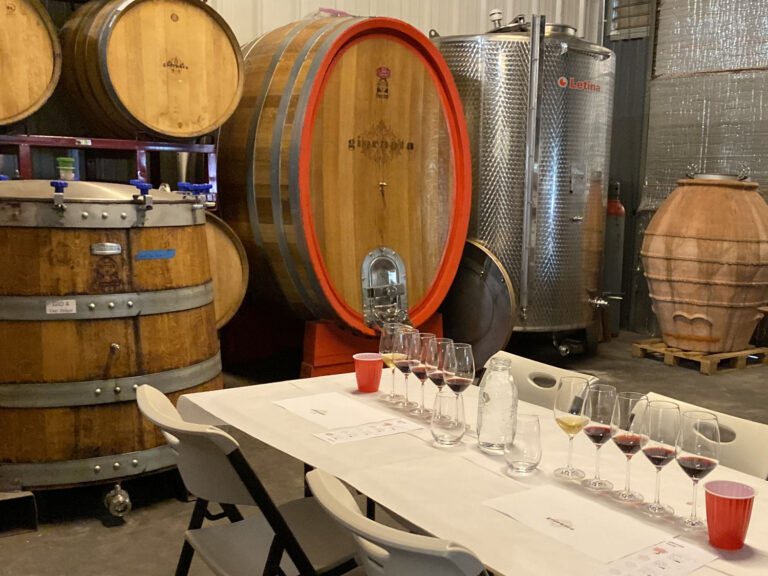
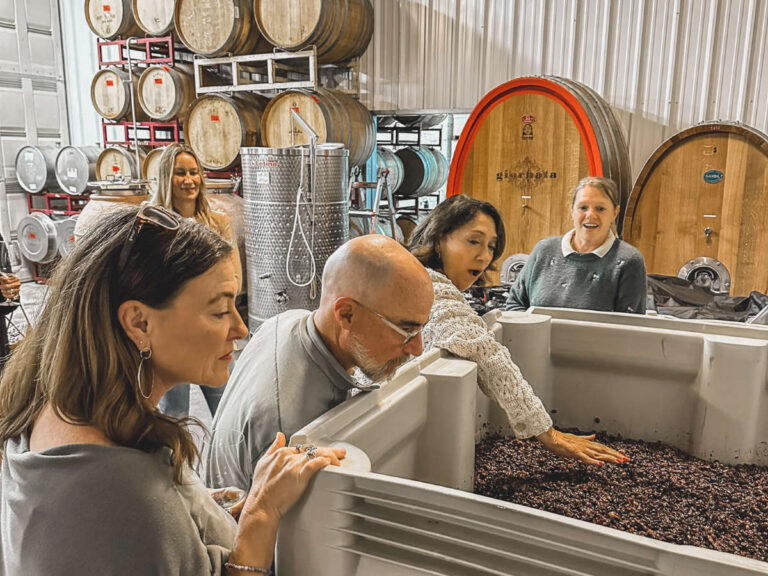
Guests interested in ROC wineries can include stops like Tablas Creek, Halter Ranch, Robert Hall, MAHA, Le Cuvier or Booker Vineyard on a custom Paso Robles ROC wine tour.

FAQ - Frequently Asked Questions
What is regenerative organic wine?
Regenerative Organic Wine is wine made from grapes grown on vineyards farmed to improve the health of people, animals, and the land. Instead of simply sustaining the ecosystem, regenerative farming aims to leave it healthier than before.
What does ROC stand for in wine?
ROC in wine stands for Regenerative Organic Certified®. It’s a certification built on top of organic farming standards, and not just a random wine industry buzzword. The certification was created by the Regenerative Organic Alliance, founded by Patagonia, Dr. Bronner’s, and the Rodale Institute, organizations that have become leaders in sustainability and regenerative agriculture.
Their goal was to create a farming standard that goes beyond “organic” by focusing on soil health, biodiversity, animal welfare, and social fairness alongside environmental sustainability.
What is the difference between organic and regenerative farming?
Organic farming focuses on avoiding synthetic pesticides, herbicides, and fertilizers. Regenerative farming goes a step further by actively improving the ecosystem through practices like cover crops, composting, grazing animals, and building healthier soils. The goal is not just to sustain the land, but to leave it healthier for the future.
Wineries must already be certified organic before they can become Regenerative Organic Certified® (ROC), and many regenerative wineries also incorporate practices commonly associated with biodynamic farming, like cover crops, composting, and increasing biodiversity.
All of these farming programs have overlap and are helping create more awareness around how our food is grown.
Is regenerative wine the same as biodynamic wine?
Does regenerative farming make wine taste better?
Wine is subjective, and ultimately, the best wine is the wine you enjoy drinking. But ask yourself this: doesn’t thoughtfully farmed produce often taste more vibrant and alive? Many winemakers believe healthier soils and balanced vineyards can create wines with greater depth, character, and sense of place.
Does regenerative farming make wine taste better? Maybe. But for many people, knowing the vineyard is helping leave the land healthier for future generations adds another layer of meaning to the experience.
Are ROC wines organic?
Yes. ROC certification requires vineyards to already meet certified organic standards before they can become Regenerative Organic Certified®. In other words, all ROC wines are organic, but not all organic wines are regenerative.
Are there regenerative wineries in Paso Robles?
Paso Robles has quietly become one of the most important wine regions in the country for regenerative organic viticulture.
Tablas Creek Vineyard became the first vineyard in the world to achieve Regenerative Organic Certified status and helped pioneer many of the farming conversations now influencing wineries across California.
Today, six Paso Robles wineries are part of the region’s ROC movement:
- Booker Vineyard/My Favorite Neighbor (Silver ROC)
- Halter Ranch (Silver ROC)
- Le Cuvier (Bronze ROC)
- Villa Creek Cellars/MAHA Estate (Silver ROC)
- O’Neill Vintners & Distillers/Robert Hall Winery (Bronze ROC)
- Tablas Creek Vineyard (Gold ROC)
Together, these wineries are helping position Paso Robles as a global leader in regenerative organic winegrowing.